Connect with us

Faith & Recovery

A New Chapter: Books for A New Life

From the early days of Alcoholics Anonymous, devotionals were considered a “must”.  In the biography of Dr. Bob the Co-Founder of AA, there is listed “certain musts” that needs to be followed to stay sober, number 4 states:

4. He must have devotions every morning — a “quiet time” of prayer and some reading from the Bible and other religious literature. Unless this is faithfully followed, there is grave danger of backsliding. (List found in DR. BOB and the Good Oldtimers, pp. 130-31)

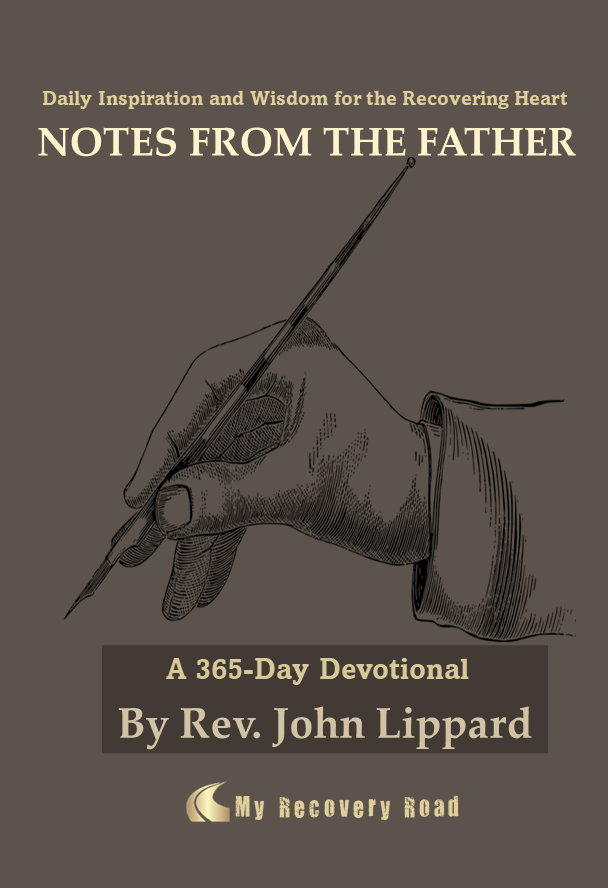
Everyone needs daily encouragement from the Lord. “Notes from the Father” by Rev. John Lippard is filled with scripture-based devotions and a prophetic word to help on days when one is feeling weak or discouraged. True healing comes in the “quiet time” of prayer and meditation, that is where a new believer understands who they are in Christ—a beloved child of God.

When someone becomes a Christian, he becomes a brand-new person inside. He is not the same anymore. A new life has begun!”  2 Corinthians 5:17 (TLB)

Give the Gift of Inspiration and Hope for the New Year– Help us reach our goal of giving away 100 Devotionals “Notes From The Father” by supporting our Book Campaign. Your donation matters!

Notes From The Father: For the Recovering Heart

Our goal is $1,500.00 for 100 Books

To reach our goal we need –

4 – Donors to give $150.00 for 10 Books  

7 – Donors to give $  75.00 for   5 Books  

7 – Donors to give $  30.00 for   2 Books  

11-Donors to give $  15.00 for   1 Book    

Any Gift Amount would be greatly Appreciated!!!

To Donate please visit our Donation Page below:

<https://actintl.givingfuel.com/my-recovery-road-book-sponsor

Continue Reading

Faith & Recovery

Decision Fatigue and Recovery: Why Small Choices Matter So Much

One of the things people rarely talk about in recovery is something called decision fatigue. Most people think recovery is just about avoiding a drink, a drug, or destructive behavior, but the truth is, recovery is often exhausting because of the constant decisions a person has to make every single day.

Before recovery, many of us lived on autopilot. We didn’t think about our choices — we reacted. When we felt pain, we used. When we felt stress, we escaped. When we felt fear, we ran. Addiction simplified life in a tragic way because it reduced everything to one decision: How do I feel, and how do I change how I feel right now?

But recovery changes that. Recovery says:

  • You must think now.
  • You must choose now.
  • You must respond instead of react.
  • You must live on purpose instead of by impulse.

And that is exhausting at first.

What Is Decision Fatigue?

Decision fatigue happens when a person makes so many decisions that their brain becomes tired, overwhelmed, and starts looking for the easiest option instead of the right option.

In recovery, this is very real. A person in recovery is making decisions all day long like:

  • Do I go to this meeting or stay home?
  • Do I answer that phone call or ignore it?
  • Do I go to that event where I know alcohol will be?
  • Do I tell the truth or do I hide?
  • Do I pray or do I isolate?
  • Do I talk about how I feel or do I push it down?
  • Do I forgive or do I stay resentful?

These decisions may seem small to other people, but in recovery, small decisions are life-changing decisions.

This is why many people feel so tired in early recovery. It’s not just physical tiredness — it’s mental and emotional tiredness from constantly choosing a new way to live.

Why Decision Fatigue Is Dangerous in Recovery

Decision fatigue is dangerous because when we get tired, we don’t make the best decisions — we make the easiest decisions.

The easiest decision is usually:

  • Isolation
  • Old habits
  • Old friends
  • Old coping mechanisms
  • Old thinking patterns

In other words, when we get tired, we drift back toward what is familiar, even if what is familiar is what nearly destroyed us.

This is why so many relapses don’t happen because someone wanted to relapse. They happen because someone got tired. They got overwhelmed. They got discouraged. They got decision fatigue and just wanted relief from the constant battle in their mind.

This is why recovery is not just about willpower. If recovery were just about willpower, the strongest people would always recover, and the weakest people never would. But that’s not what we see. Recovery is not about willpower — it is about surrender and daily dependence on God.

God Knew We Would Get Tired

The beautiful thing about Scripture is that God never asked us to live the Christian life in our own strength. He knew we would get tired. He knew we would get overwhelmed. He knew we would face decision fatigue.

That is why Scripture constantly points us to daily dependence, not one-time decisions.

“Give us this day our daily bread.”

Notice it does not say weekly bread or monthly bread. It says daily bread. Why? Because God knew we would need new strength every single day.

Recovery works the same way. Jesus said:

“Do not worry about tomorrow, for tomorrow will worry about itself. Each day has enough trouble of its own.”

That is not just good spiritual advice — that is good recovery advice.

Recovery is not lived one year at a time.
Recovery is not lived one month at a time.
Recovery is lived one day at a time.

And sometimes, it is lived one decision at a time.

Simplifying Your Life Reduces Decision Fatigue

One of the most important things a person in recovery can do is simplify their life so they make fewer unnecessary decisions.

This is why many recovery programs suggest:

  • Go to the same meeting each week
  • Talk to the same sponsor
  • Have a daily routine
  • Read the same devotional time each morning
  • Pray at the same time each day
  • Avoid places that trigger you
  • Avoid people who pull you backward

This is not about rules — this is about protecting your mind and your energy.

The more decisions you remove, the more strength you have for the decisions that really matter.

Even Jesus lived with a rhythm and a routine. Scripture says He often withdrew to lonely places to pray. He had a pattern. He had a rhythm. He had a place where He met with the Father.

If Jesus needed quiet time with the Father to continue His mission, how much more do we need it in recovery?

Decision Fatigue and Surrender

This is where faith becomes so important in recovery. Faith reduces decision fatigue because instead of asking:

“What do I feel like doing today?”

You start asking:

“What is the next right thing God would have me do today?”

That question simplifies life.

Instead of 100 decisions, life becomes:

  • Do the next right thing
  • Tell the truth
  • Stay honest
  • Stay humble
  • Help someone else
  • Pray
  • Don’t quit

Recovery becomes less about managing your whole life and more about taking the next right step.

Psalm 119 says:

“Your word is a lamp to my feet and a light to my path.”

Notice it does not say a spotlight to your whole future. It says a lamp to your feet. A lamp only shows you the next few steps, not the whole road.

God often guides us the same way we live recovery — one step at a time.

When You Are Tired, Decide Ahead of Time

One of the best things you can do in recovery is make some decisions before you get tired.

Decide ahead of time:

  • I will go to a meeting when I feel like using.
  • I will call someone when I want to isolate.
  • I will pray when I feel overwhelmed.
  • I will not go to places that trigger me.
  • I will tell the truth even when it’s uncomfortable.
  • I will ask for help when I need it.

If you make these decisions ahead of time, then when decision fatigue hits, you don’t have to decide — you just follow the plan.

This is why 12 Steps are so powerful. They remove thousands of decisions and replace them with a path. You don’t have to invent a new way to live every day — you just walk the path.

The Good News

The good news is this: Decision fatigue does not last forever. As you grow in recovery, the new life becomes more natural. The right decisions become habits. The habits become character. The character becomes a new way of life.

What is hard today will become natural tomorrow.

At first, you are forcing yourself to make good decisions.
Later, you are training yourself to make good decisions.
Eventually, you become the kind of person who naturally makes good decisions.

That is what recovery really is — not just changing your behavior but becoming a new person.

And the beautiful truth of faith-based recovery is this:

You are not doing this alone.

When you are tired, God is not tired.
When you are weak, God is not weak.
When you don’t know what to do, God does.

So when decision fatigue hits — and it will — remember this simple prayer:

“God, I don’t have the strength for a thousand decisions today.
Just show me the next right thing to do.”

And then do that one thing.

One decision.
One step.
One day at a time.

That is how recovery works.
That is how faith works.
That is how a new life is built.

One right decision at a time.

Continue Reading

Faith & Recovery

Realistic New Beginnings

Realistic New Beginnings: Hope That Holds in Recovery

For anyone walking the road of addiction recovery, the phrase new beginning can sound both beautiful and dangerous. Beautiful, because deep down every wounded heart longs for a fresh start. Dangerous, because many people in recovery have already been promised new beginnings that never came. They tried willpower. They tried rehab. They tried vows, bargains, and resolutions. Some even tried faith. And still they found themselves right back where they started, ashamed, exhausted, and wondering if change is really possible.

So what does a realistic new beginning look like?

It does not mean instant perfection. It does not mean never struggling again. It does not mean becoming someone else overnight. A realistic new beginning is something far deeper and far more hopeful. It means that, even in the middle of weakness, a new story is being written.

In recovery, a new beginning is not about erasing the past. It is about being freed from being ruled by it.

Why new beginnings feel impossible

Addiction does not just damage the body. It reshapes the brain, the nervous system, and the sense of self. Over time, people stop believing they are capable of real change. Relapse is not just a return to substances. It is a return to hopelessness. Each failure reinforces the lie that this is just who I am.

Shame cements that lie. When people feel broken beyond repair, they stop trying. They stop dreaming. They stop believing that God, others, or even their own future could be different.

That is why recovery is not just behavioral. It is spiritual and emotional. Before a person can live differently, they must begin to see themselves differently.

A realistic new beginning starts with a new identity.

New beginnings are about direction, not perfection

One of the biggest traps in recovery is the belief that starting over means doing everything right from now on. When someone falls, they feel as if they have lost everything. But that is not how healing works.

Think of recovery like turning a ship. A massive vessel does not change course in one second. It begins with a small shift in the wheel. The ship is still moving forward while it turns. Sometimes waves push it off course. But the direction has changed, and that changes everything.

A realistic new beginning is not about never making mistakes again. It is about no longer traveling toward destruction.

Every time someone chooses honesty instead of hiding, help instead of isolation, or surrender instead of control, the ship turns a little more. Over time, that new direction leads to a new destination.

Hope that is anchored, not imagined

Many people in addiction have learned to hope in things that could not hold them, drugs, relationships, money, or even their own willpower. When those hopes collapse, they become afraid to hope again.

But real hope is not wishful thinking. Real hope is anchored.

In recovery, hope is anchored in three truths.

First, that healing is possible.
Second, that they are not alone.
Third, that God is not finished with them.

Scripture says that God makes all things new. That does not mean He makes them easy. It means He makes them redeemed. Even the broken pieces become part of something beautiful.

A realistic new beginning is not built on optimism. It is built on trust in a God who restores.

Why the past does not disqualify the future

One of the cruelest lies of addiction is that your past defines your future. But the Bible is filled with people whose failures became the foundation of their calling. Moses was a murderer. David was an adulterer. Peter was a denier. Paul was a persecutor.

None of them were chosen because they were clean. They were chosen because they were willing.

Recovery works the same way. God does not wait until someone is healed before He begins to use them. He heals them as He uses them. The process itself becomes the testimony.

A realistic new beginning is not about having no scars. It is about letting God use them.

The courage to begin again

Every day in recovery requires courage. Not heroic courage. Honest courage. The courage to tell the truth. The courage to ask for help. The courage to face feelings that were once numbed by substances. The courage to believe that tomorrow could be different.

Sometimes the bravest thing a person can do is wake up and try again.

A realistic new beginning is made up of many small beginnings. One prayer. One meeting. One honest conversation. One surrendered choice.

These are not small things. They are the building blocks of a new life.

When faith meets recovery

For many in recovery, faith has been tangled with disappointment. Some prayed and still relapsed. Some believed and still suffered. But faith is not a vending machine. It is a relationship.

Recovery is not about asking God to fix everything instantly. It is about walking with Him through the process of becoming whole.

Jesus did not just forgive people. He healed them. He restored them. He gave them a new way of living. That is the kind of new beginning that lasts.

In recovery, faith is not about pretending everything is fine. It is about trusting that God is present even when things are not.

A future that is still being written

No matter how long someone has struggled, their story is not over. The fact that they are still breathing means there is still hope. There is still purpose. There is still something God wants to do through them.

A realistic new beginning does not promise a pain free life. It promises a meaningful one. It promises that even the hardest chapters can be redeemed.

For anyone in recovery reading this, you are not behind. You are not broken beyond repair. You are not too late.

You are in the middle of a story that is still being written and every day you choose healing, surrender, and truth, you are stepping into a new beginning that is real, lasting, and full of hope.

Continue Reading

Faith & Recovery

The Holidays and Recovery: Finding Hope, Strength, and Jesus in a Challenging Season

For many people, the holidays are wrapped in warmth—lights, laughter, parties, meals, family gatherings, and traditions. But for others, especially those walking the recovery road, the holidays can feel complicated. A season intended to bring joy can instead stir anxiety, loneliness, grief, financial stress, or memories of a past shaped by addiction. The contrast is often overwhelming: the world is celebrating while your heart may still be healing.

Yet it is in this very tension that the message of Christmas and the hope of Jesus shine the brightest. Recovery isn’t suspended during the holiday season, it continues, often with more intensity. But the good news is this: Jesus meets you in the very place where your heart feels stretched the most. The same Savior who came into a broken world comes into your broken places today with peace, strength, and restoration.

  1. Holidays Expose Our Triggers—But They Also Reveal Our Deepest Need for Jesus

For many in recovery, the holidays bring a flood of emotional triggers: gatherings where alcohol is present, strained family dynamics, shame over the past, loneliness, or a painful sense of not fitting in. Even sights and sounds—Christmas music, certain foods, old traditions—can stir memories of who you used to be or seasons marked by addiction.

But triggers aren’t signs of failure; they’re signals of need.

The first three steps of recovery tell the truth we often avoid: I can’t do this alone. I need a power greater than myself. Christmas reminds us that this Power has a name—Jesus.

  • He came into darkness, not light.
  • He came into human weakness, not strength.
  • He came into messiness, not perfection.

The holiday season reveals our humanity, but that is exactly where the Savior enters.
When you feel overwhelmed, you are positioned to experience His nearness in a deeper way.

“The Lord is close to the brokenhearted and saves those who are crushed in spirit” (Psalm 34:18).

Christmas is God’s declaration that He refuses to leave you alone in your struggle.

  1. Jesus the Savior Comes to Rescue You—Right in the Holidays

The birth of Jesus is more than a heartwarming nativity scene—it is God launching a rescue mission. The Savior entered the world not for people who had it all together, but for those who were sinking.

In recovery, you may feel the weight of expectations during Christmas:
I should be further along by now. I should be stronger. I shouldn’t still struggle.

But Jesus doesn’t come with shame; He comes with rescue.

He steps into your holiday stress, emotional overwhelm, cravings, relational wounds, and fears with the same invitation He offered Peter as he sank in the waves: “Take courage… I am here” (Matthew 14:27).

Your recovery doesn’t pause for Christmas—but neither does His saving grace.
Each day of the season, He extends His hand. Each moment, He whispers, “I came for you.”

  1. The Holy Spirit Empowers You When You Feel Weak

Christmas celebrates Jesus coming to earth, but it also points forward to the gift of the Holy Spirit—God’s empowering presence in your daily recovery.

Holidays can drain emotional and mental strength.
Old patterns try to re-emerge.
Stress piles up.
Temptations grow louder.

But the Holy Spirit grows stronger in the surrendered heart.

When you feel:

  • Weak → He becomes your strength
  • Confused → He becomes your guide
  • Triggered → He becomes your peace
  • Tempted → He becomes your power
  • Lonely → He becomes your Comforter

“Not by might, nor by power, but by my Spirit,” says the Lord (Zechariah 4:6).

Your recovery during the holidays isn’t sustained by willpower—but by the Holy Spirit filling the places where your natural ability falls short.

He empowers you to choose boundaries.
He empowers you to choose honesty.
He empowers you to choose peace over chaos, prayer over panic, and surrender over self-reliance.

  1. Jesus the Healer Restores What the Holidays Bring to the Surface

The holidays often reopen old wounds—loss, trauma, rejection, abandonment, disappointments, or the ache of what “should have been.” Recovery is not just about staying sober; it’s about allowing Jesus to heal the deeper roots that once drove addiction.

This season, let Jesus be your Healer:

  • He heals grief.
  • He heals memories.
  • He heals family hurt.
  • He heals emotional triggers.
  • He heals the lies you still believe about yourself.

“He heals the brokenhearted and binds up their wounds” (Psalm 147:3).

Healing rarely happens in quiet seasons—it often happens in the messy ones.
So if this holiday feels heavy, don’t assume something is wrong. It may be the place Jesus is ready to do His deepest work.

  1. You Can Create a Christ-Centered Recovery Plan for the Holidays

Recovery doesn’t happen accidentally—it happens intentionally.

Here are spiritually grounded steps to stay steady through the season:

  1. Start each day with Scripture before anything else.

Set your mind on truth before stress has a chance to speak.

  1. Pray simple, honest prayers.

“Jesus, lead me. Strengthen me. Keep me sober. Heal what hurts.”

  1. Stay connected to safe people.

Isolation is one of the enemy’s favorite holiday weapons.

  1. Have a boundary plan.

Decide ahead of time what you will and will not participate in.

  1. Use Step 10 daily.

A quick spiritual inventory keeps you grounded and honest.

  1. Serve someone else.

Helping another person breaks the power of self-focus and strengthens your recovery.

  1. Stay aware of HALT (Hungry, Angry, Lonely, Tired).

Holidays heighten all four—name them early.

Jesus doesn’t ask you to survive the holidays—He strengthens you to walk through them with clarity, confidence, and His presence.

  1. The Hope of Christmas Is the Hope of Recovery

Christmas tells the truest story of recovery:

  • Light shines into darkness.
  • Hope breaks into despair.
  • God comes near to the broken.
  • Restoration begins in unexpected places.
  • Healing starts with surrender.
  • A Savior comes to rescue, empower, and restore.

No matter what your holidays have looked like in the past, Jesus offers you something new this year:
Peace that surpasses understanding.
Strength beyond your own.
Healing that reaches your deepest places.
And hope that is stronger than addiction.

You’re not walking this season alone.
You’re not fighting for freedom by yourself.
And you’re not left to navigate holiday stress in your own strength.

Jesus came for you.
Jesus stays with you.
And Jesus will carry you through.

This is the message of Christmas.
This is the promise of recovery.

Continue Reading

Trending

Copyright © 2026 My Recovery Road